As an Amazon Associate we earn from qualifying purchases. Full details on our Affiliate Disclosure page.
How do you play Rummikub? (2026) — rules, setup, and beginner strategies for the classic tile rummy race. Soft-module related table games (Azul, Catan, Exploding Kittens) while you hunt a dedicated Rummikub set — this page teaches the game, then points to great shelf neighbors.
Related: Rummikub set guide · best card games with a standard deck · game night party hub · how to play Mysterium · Phase 10 vs Skip-Bo.
Tile / table neighbors
Rummikub itself is a tile rummy classic. Soft-related picks while you shop: Azul for calm pattern play, Catan for longer negotiation nights, Exploding Kittens for a short encore.
- Soft related: Azul → Amazon — beautiful mosaic strategy for 2–4
- Longer table: CATAN → Amazon — trade-and-build evenings
- Fast encore: Exploding Kittens → Amazon — after the tile race
What Rummikub is
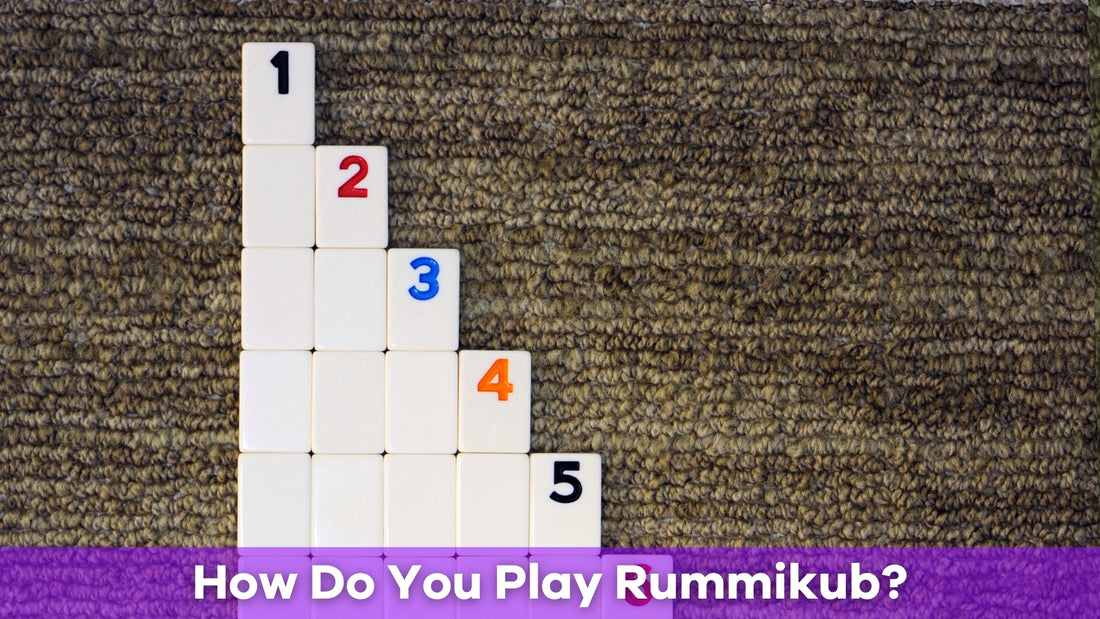
Rummikub is tile-based rummy: build sets (same number, different colors) and runs (consecutive numbers, same color), manipulate the table legally, and race to empty your rack. It is not Phase 10 (phased card goals) and not Azul (pattern drafting) — those are soft neighbors, not substitutes.
Setup
- Players: best at 2–4.
- Tiles: 106 tiles typical (2× 1–13 in four colors + jokers depending on edition).
- Deal: commonly 14 tiles each; remaining tiles form the pool.
- Goal: be first to play all tiles from your rack.
How a turn works
Initial meld: most houses require a minimum point threshold (often 30) before you can play onto the table. After that, on your turn you may rearrange existing sets/runs as long as everything left on the table is still legal, then end with a valid table. If you cannot play, draw one tile.
Beginner strategy
- Hold flexible tiles early; dump awkward singles when the table opens.
- Track jokers — they unlock huge manipulations.
- Do not break a set unless you can leave the table fully legal.
- Watch opponents’ racks thinning — deny obvious completes when you can.
Common mistakes
- Manipulating the table into an illegal state and arguing mid-hand.
- Forgetting the initial meld threshold.
- Buying Azul expecting Rummikub rules — different games.
- No encore plan for players who finish early.
After Rummikub
Park Exploding Kittens for a short laugh, or Azul if the table wants calm visuals. Longer negotiation nights: CATAN. More how-tos: Mysterium · Phase 10 vs Skip-Bo.
FAQ
How many tiles do you start with?
Usually 14 each — confirm your edition’s rulebook.
Are jokers required?
Most modern sets include jokers; agree values before deal one.
Is Azul the same as Rummikub?
No. Azul is mosaic drafting. This page teaches Rummikub; Azul is a soft related buy when you want a different tile vibe.
Initial meld & table law
- Agree the initial meld point threshold before deal one (commonly 30).
- Every manipulation must leave only legal sets and runs.
- If you cannot play, draw one and end your turn.
- Jokers usually substitute any tile — house-confirm replacement rules.
House variants
- Strict vs casual manipulation: some tables limit how deep you may rebuild.
- Time per turn: soft 60–90 second vibe keeps energy up.
- Two-player pace: expect longer races; agree a points-left soft cap if needed.
Host script
- Demo one open manipulation before scoring starts.
- Post the color/number legend for new players.
- Park Exploding Kittens as the planned encore.
- Soft-link the Rummikub set guide for buying advice.
Why Rummikub still trends
Rummikub sits between pure card rummy and modern euro comfort: tactile tiles, shared table manipulation, and a race that scales for mixed ages. Beginners need a clean initial-meld explanation more than advanced theory — teach the law of the table first.
If your group prefers phased card goals instead, soft-link Phase 10 vs Skip-Bo.